

Products
Every layer of the job.9
Liners, fabrics, drainage, grid, erosion control and pipe from established geosynthetic manufacturers. Sizes and properties shown are general; your project spec and the manufacturer's data govern.
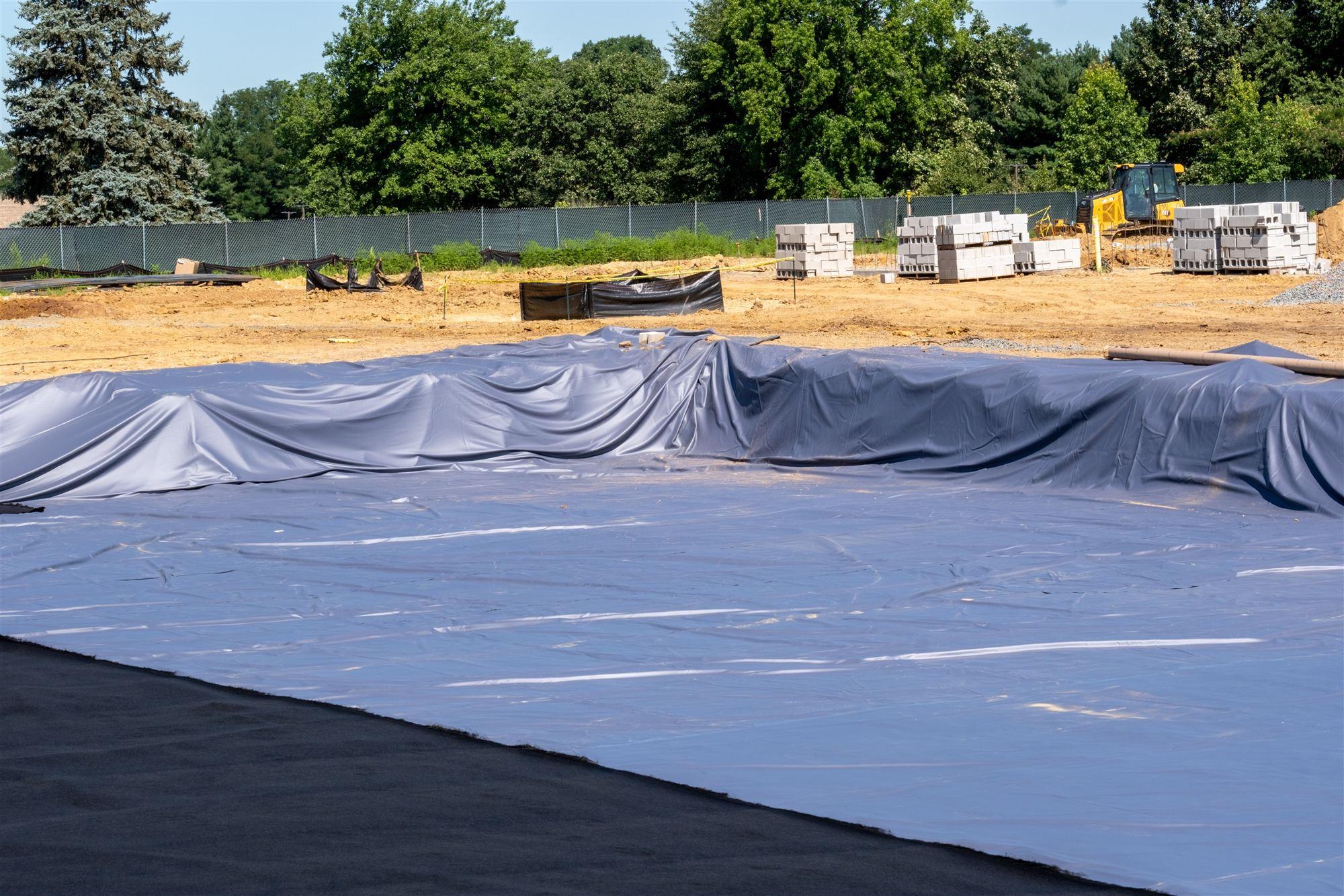
Geomembrane liners
The barrier layer that holds liquid in or keeps it out: ponds, lagoons, canals, landfills, caps and secondary containment.
- PVC
- Flexible and easy to fit to the ground. Can be factory-fabricated into large panels, so there's less seaming on site.20, 30 and 40 mil. 30 mil is the most common.
- HDPE
- Stiff, tough and highly chemical resistant, with strong UV resistance. The standard for landfills, mining and large containment.30 mil and heavier. Smooth or textured for grip on slopes; black, or white-surfaced to run cooler in the sun.
- LLDPE
- A more flexible polyethylene that handles settling ground. Common in caps, covers and lagoons.Smooth or textured.
- Polypropylene (RPP and fPP)
- Flexible polypropylene, plain or scrim-reinforced for strength and tear resistance, and made to handle the sun. Suited to exposed liners and floating covers.Fabricated panels available.
- Reinforced polyethylene (RPE)
- Light, strong and economical. Farm ponds, canals, covers and temporary containment.Sun life depends on the grade. Fabricated panels available.
- EPDM
- Rubber liner that stays flexible. Decorative ponds, water features and landscape work.
- Geosynthetic clay liners (GCL)
- Sodium bentonite clay held between two geotextiles. It swells when wet to form a tight seal and can close small punctures. Used under soil on its own, or under a geomembrane as a composite liner. It has to be covered, and the water and soil chemistry should be checked first.At least 0.75 lb of bentonite per sq ft (dry), the common industry minimum. Film-backed versions available.
- Gas and vapor barriers
- Polyethylene sheet laid under slabs on ground that gives off methane or chemical vapors, built to the environmental engineer's design.
- Spray-applied liners
- Liquid-applied membranes for concrete, tanks and shapes a sheet can't follow.
Usually specified to ASTM D7176 (PVC), GRI-GM13 (HDPE), GRI-GM17 (LLDPE), GRI-GCL3 (GCL).
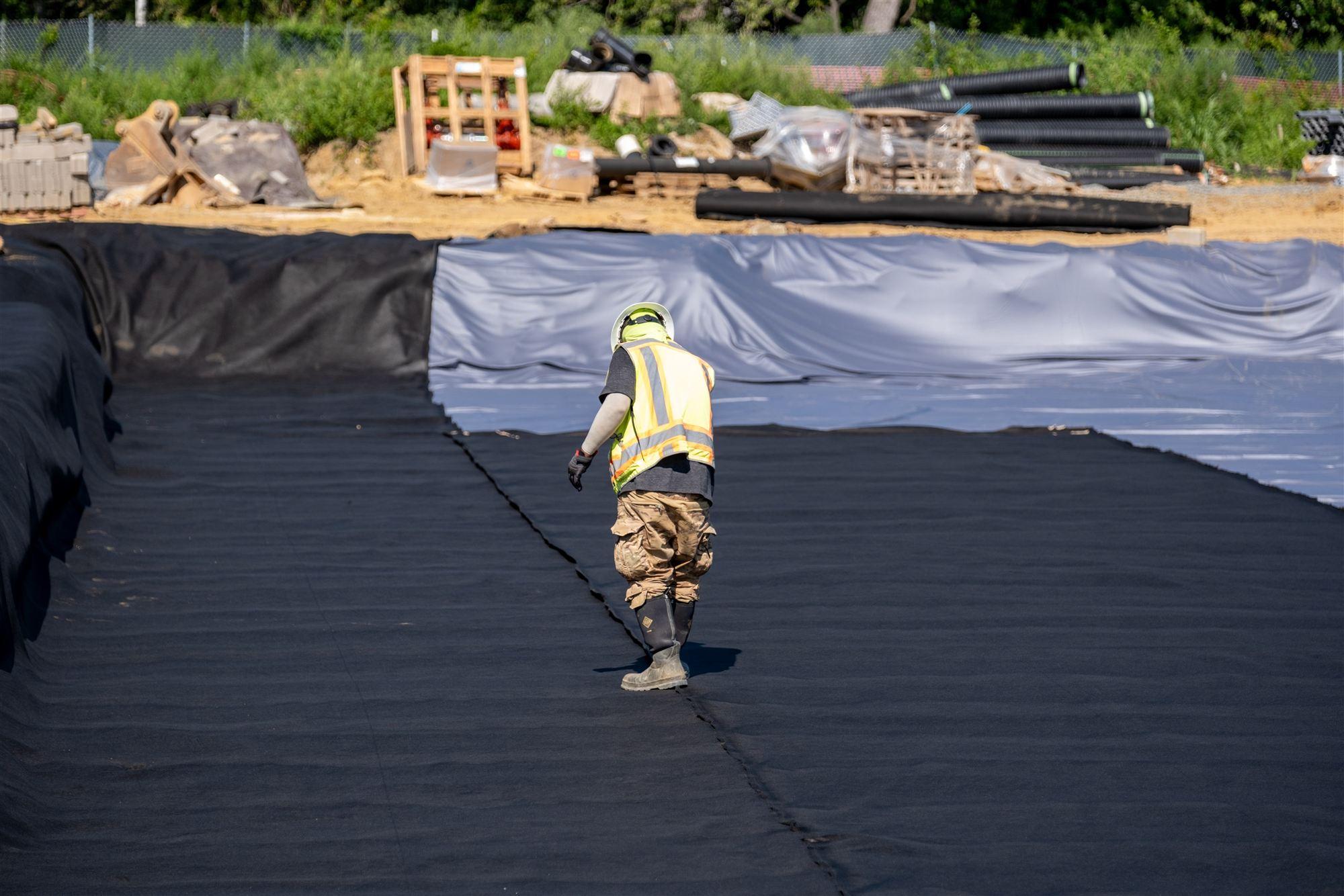
Geotextiles
Fabric that separates, filters, cushions and stabilizes, under liners, roads, pads and riprap.
- Nonwoven needle-punched
- Felt-like polypropylene for cushioning under liners, filtration, drainage and separation. Treated to resist sunlight, but meant to be covered.Civil and environmental grades, light to heavy weights.
- Paving fabric
- Nonwoven interlayer under asphalt overlays.
- Woven monofilament
- Consistent openings and high flow for filtration behind walls and under riprap.
- Woven high-performance and high-modulus
- High strength and low stretch for reinforcement over soft ground.
- Wicking stabilization fabric
- Woven fabric with wicking yarns that draw water out of road base, for wet, soft ground.
- Woven slit film
- Economical separation and stabilization under roads, pads and stone. Not for drainage or filtering.
- Geotextile tubes and bags
- Containers for dewatering sludge and dredge material, and for shoreline protection.
Usually specified to AASHTO M288 in many states. Florida DOT uses its own fabric types and approved product list.
Geogrids
Reinforcement that locks stone and soil together, on roads, pads, slopes and walls.
- Biaxial geogrid
- Base reinforcement for haul roads, highways, rail and working platforms on soft ground.
- Multi-axial geogrid
- Triangular openings that spread load in every direction, for stabilizing base stone on soft ground.
- Uniaxial geogrid
- One-direction strength for retaining walls, reinforced slopes and berms.
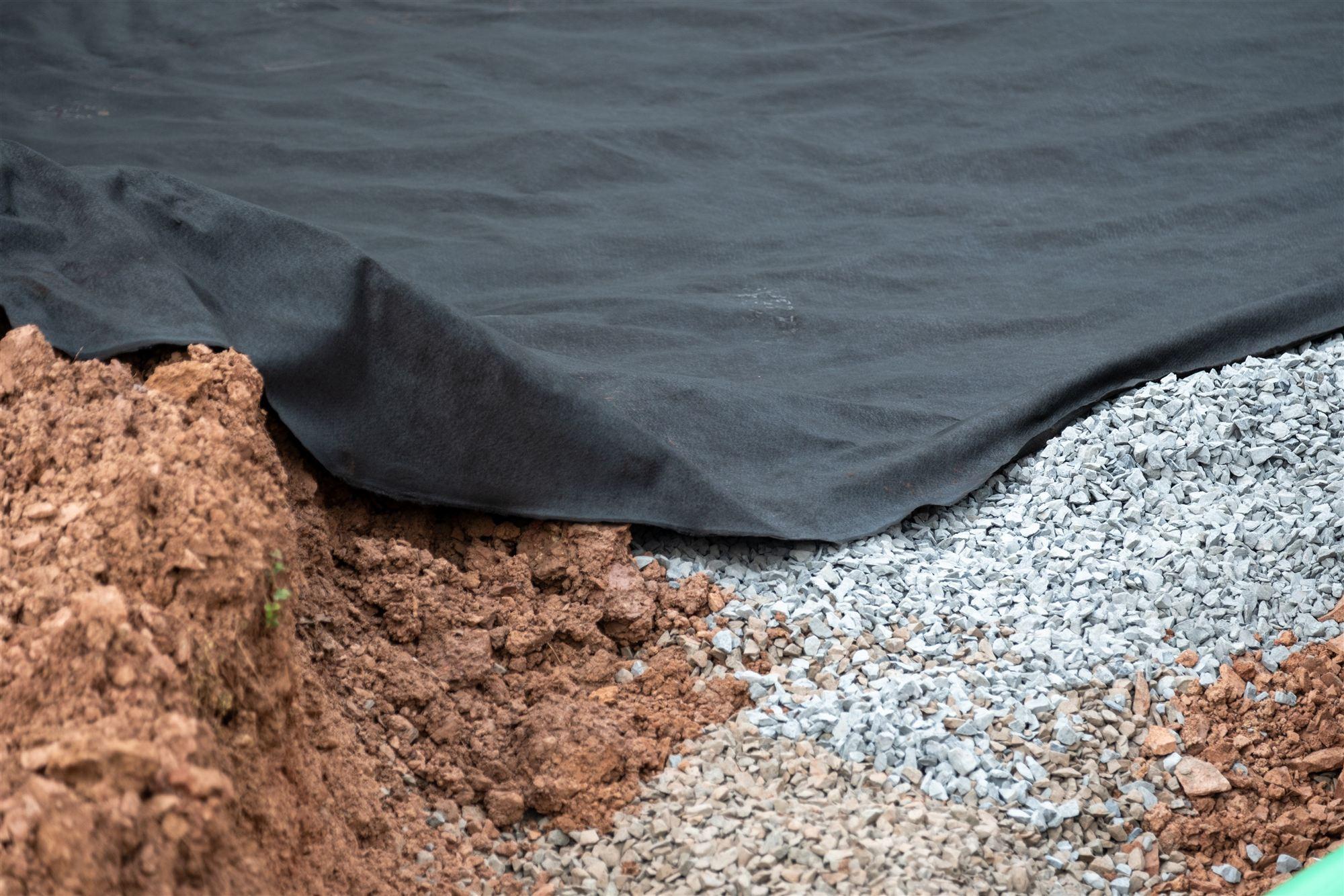
Drainage composites
Thin drainage layers that carry water, and in landfills gas, under and over liners, behind walls and under slabs and fields.
- Geonets
- High-flow drainage layers under and over geomembranes.
- Geocomposites
- Geonet bonded to geotextile for drainage layers in landfills, caps and behind walls.
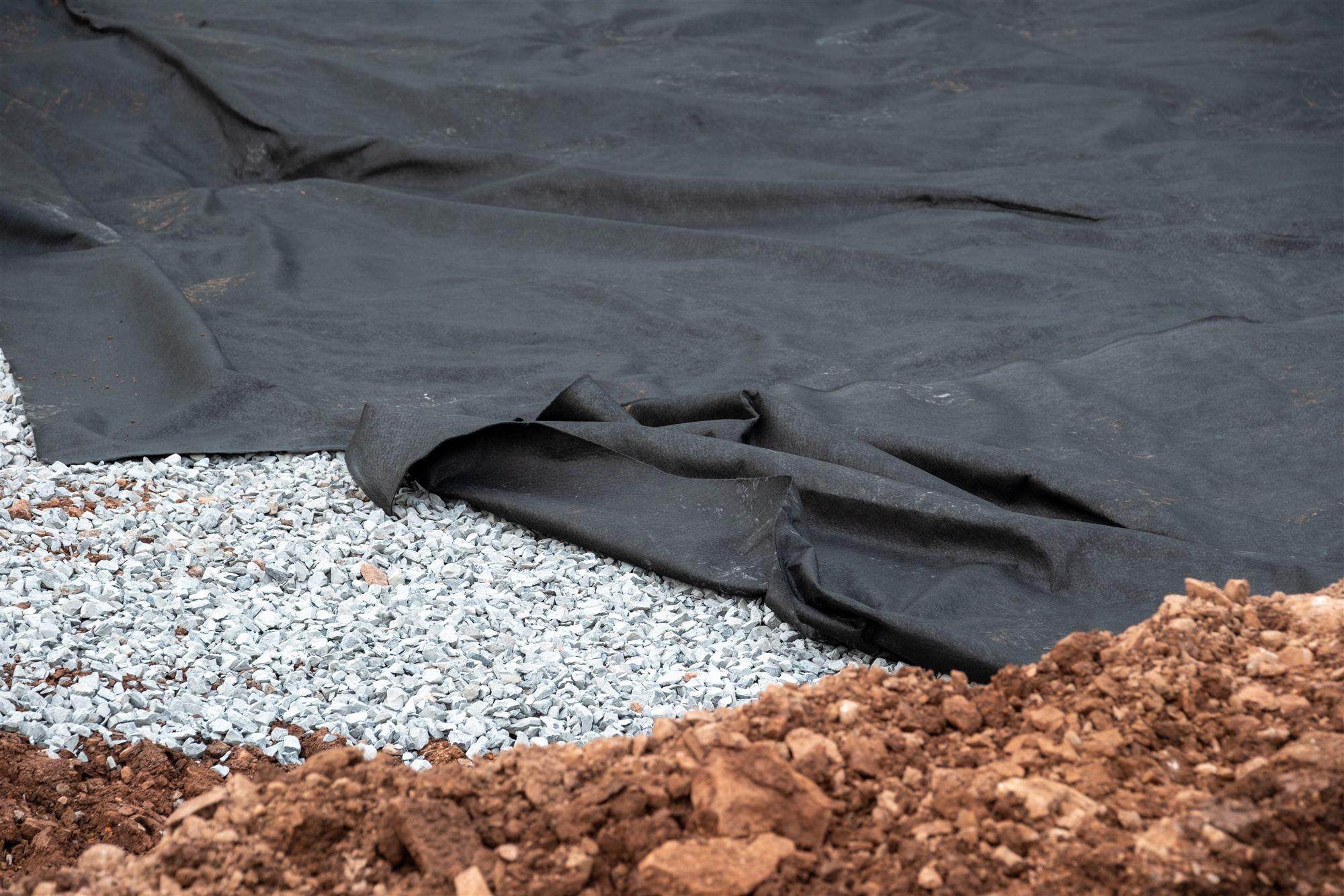
Erosion control
Hold bare soil in place until grass takes over, or reinforce the grass for good where plants alone can't hold it.
- Erosion control blankets
- Straw, excelsior or coconut fiber with single or double netting, for slopes, roadsides and low-flow channels.Ultra-short-term to long-term, from about 3 months to about 3 years.
- Turf reinforcement mats
- Permanent woven or stitch-bonded synthetic mats for vegetated channels, high-flow ditches and steep slopes.
- Coir mats
- Strong natural fiber for shorelines, banks and slopes.
- Jute mesh
- Open natural mesh that holds seed and soil on gentler ground.
- Fabric-formed concrete
- Fabric forms filled with concrete on site to armor channels, slopes and shorelines where grass can't hold.
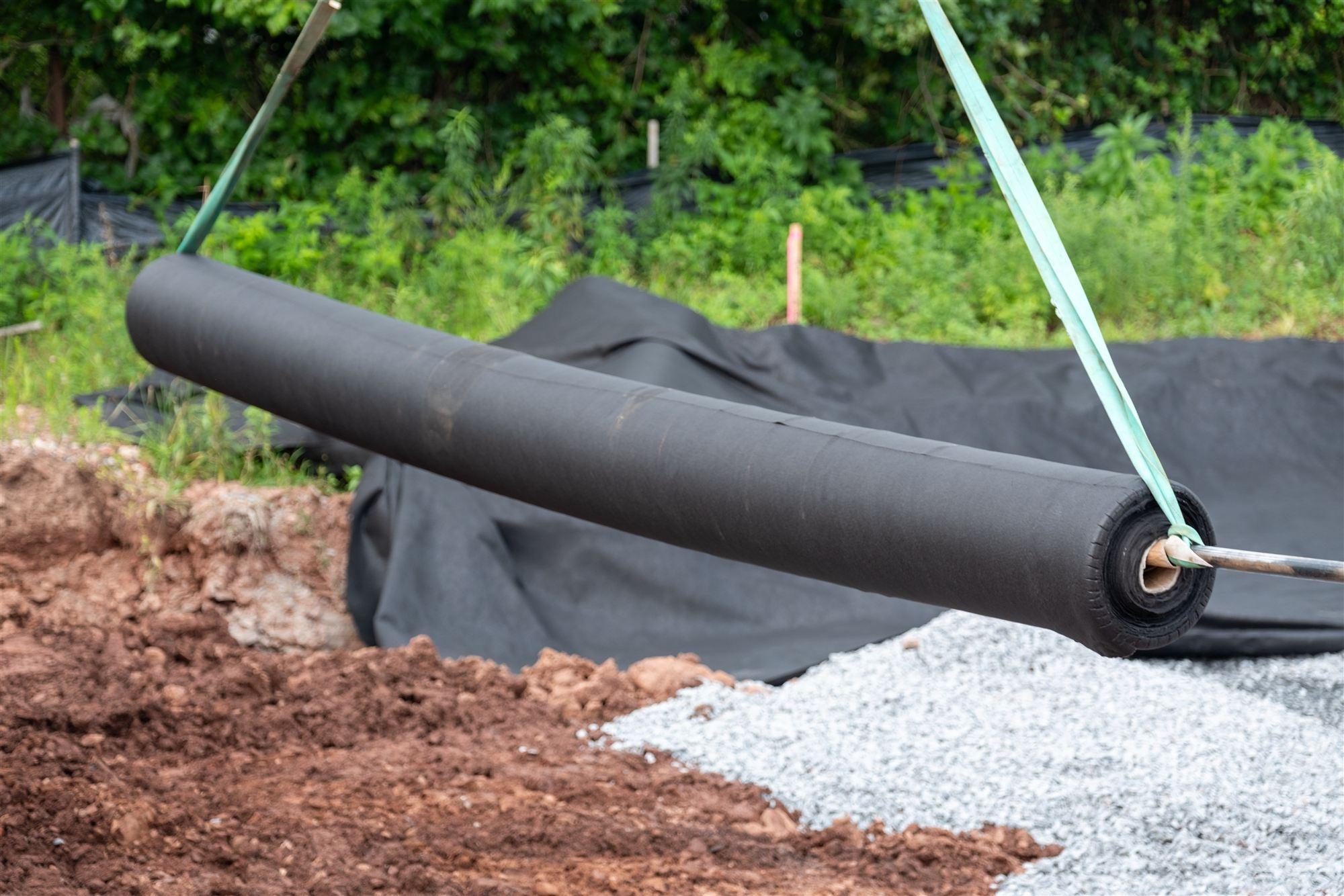
Sediment control
Keep sediment on site and out of drains, ditches and open water.
- Silt fence
- Woven or nonwoven fence fabric that holds back muddy runoff at the edge of the work. Rolls, or ready-staked on wood posts.
- Turbidity barriers
- Floating curtains for calm water up to moderate current and chop, or staked barriers for shallow water and shorelines.Type I, II and III: light, moderate and heavy duty.
- Wattles, filter socks and coir logs
- Slow runoff and catch sediment on slopes, along curbs and at the toe of banks. Standard and high-visibility wattles, and compost-filled socks.
- Inlet bags and grate sleeves
- Protect storm drains during construction.
- Dewatering bags
- Filter pumped water and hold the sediment.
- Sandbags and orange barrier fence
- Site essentials.
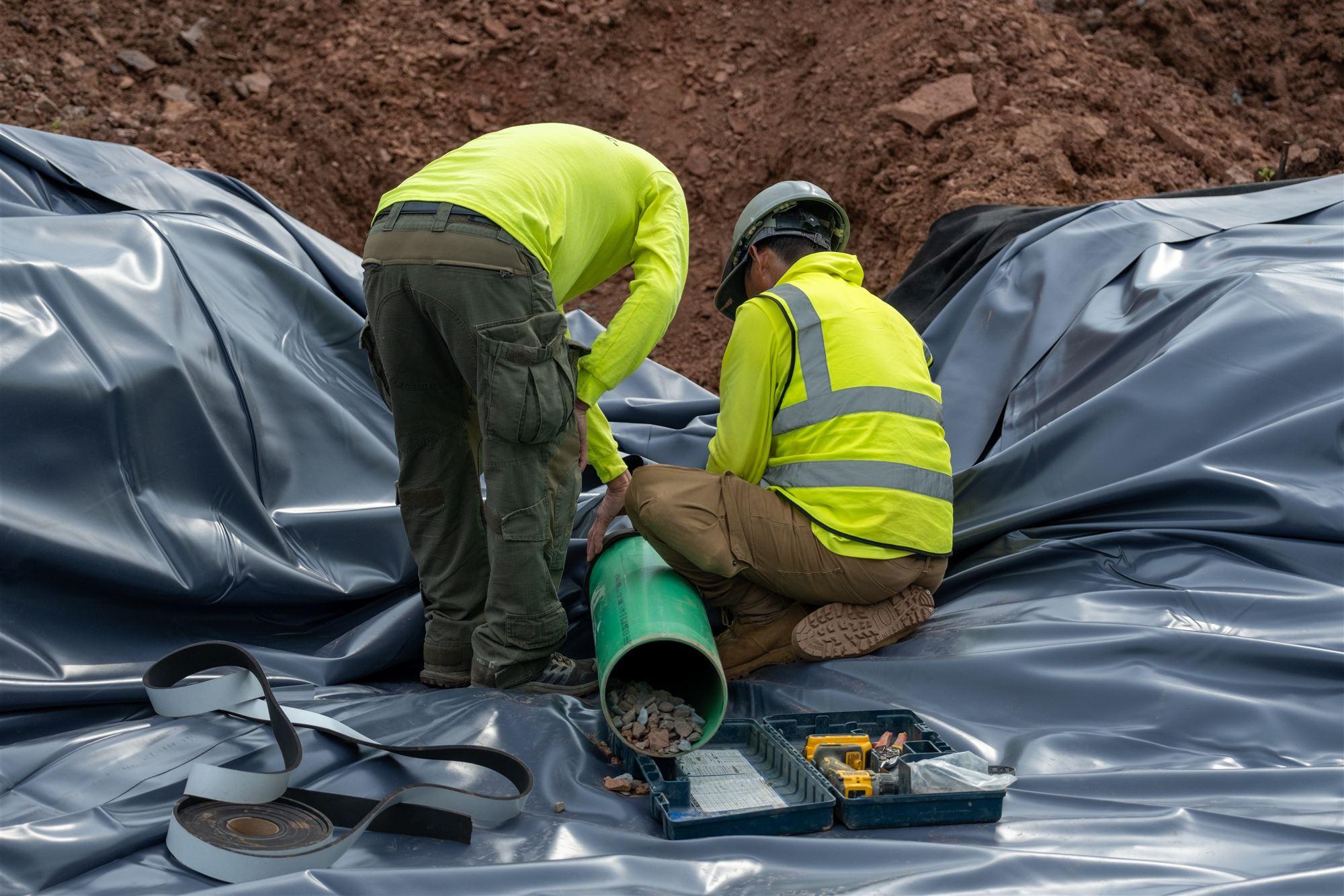
HDPE pipe
HDPE pipe and fittings for water, drainage, collection and containment: fusion-joined pressure pipe, plus perforated and corrugated drainage pipe.
- Solid-wall pressure pipe
- Water, wastewater, process and irrigation lines. UV-resistant black pipe can run above ground.IPS, DIPS and CTS sizes. DR 7 to DR 32.5.
- Perforated and corrugated pipe
- Perforated pipe for leachate and gas collection and underdrains; corrugated pipe for site, storm and subsurface drainage.
- Coiled and dual-containment pipe
- Long continuous runs, and pipe-within-a-pipe for hazardous lines.
- Fittings and transitions
- Standard and custom fittings, with transitions to PVC, steel, mechanical joint and flange.
- Fusion equipment
- Butt fusion and electrofusion machines to rent for the job.
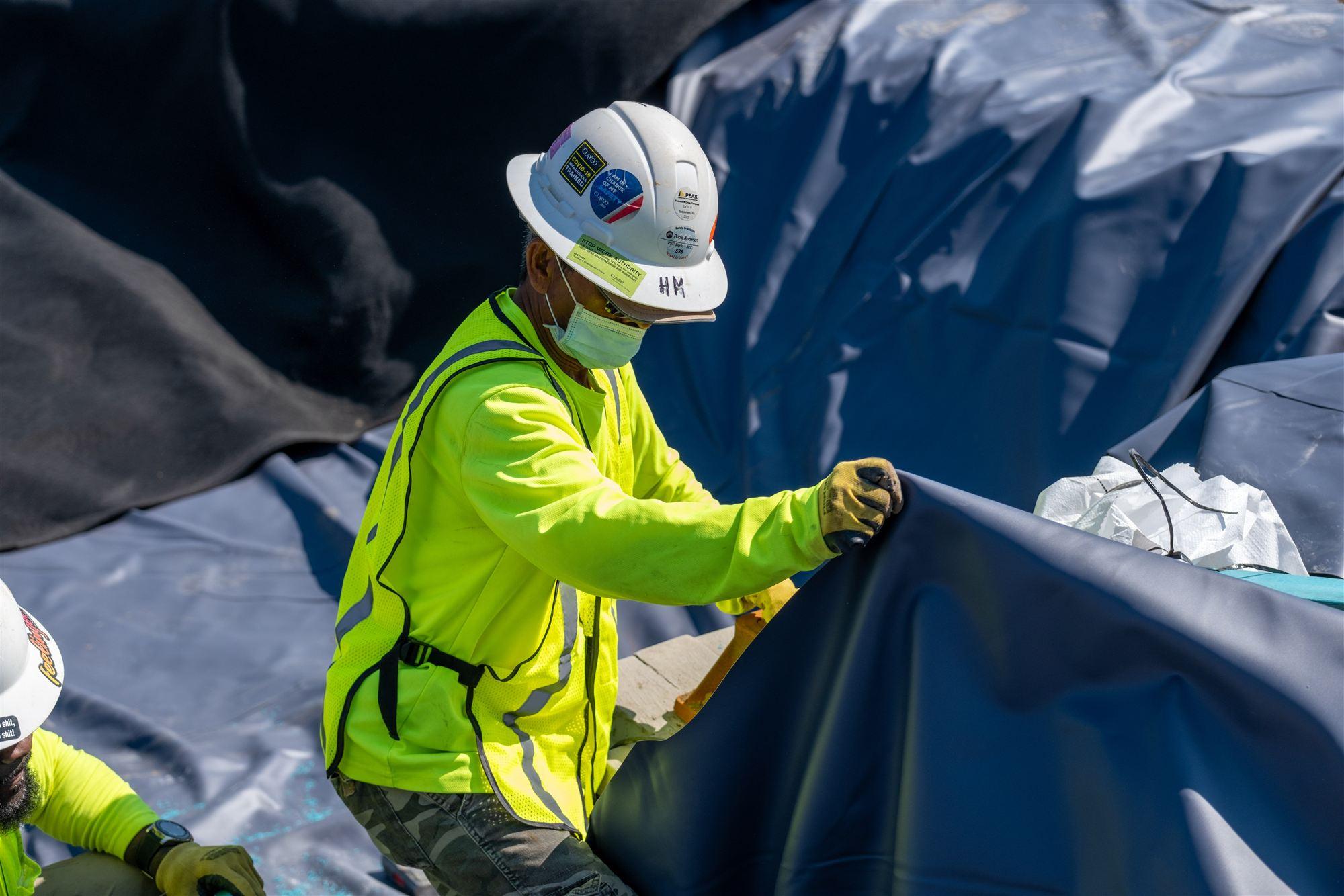
Custom fabrication
Made to your layout, so less of the work happens in the field.
- Liner panels
- Factory-seamed PVC and reinforced liner panels, sized to the job.
- Geotextile panels, slitting and rerolling
- Sewn panels, custom widths and custom roll lengths.
- Pipe boots and penetrations
- Pre-made boots that seal liners around pipes and structures.
- Concrete-embedment liners and anchors
- HDPE sheet and anchor strip cast into concrete, to protect it from corrosion and give a liner something to weld to.
- Floating and modular covers
- Covers for ponds, tanks and basins that help with odor, evaporation, algae and heat loss.
- Pit liners and spill berms
- Prefabricated pit liners, and portable berms that can form part of a site's spill containment for tanks, trucks and drums.
- Temporary landfill covers
- Rain covers and interim covers for landfill cells and slopes.
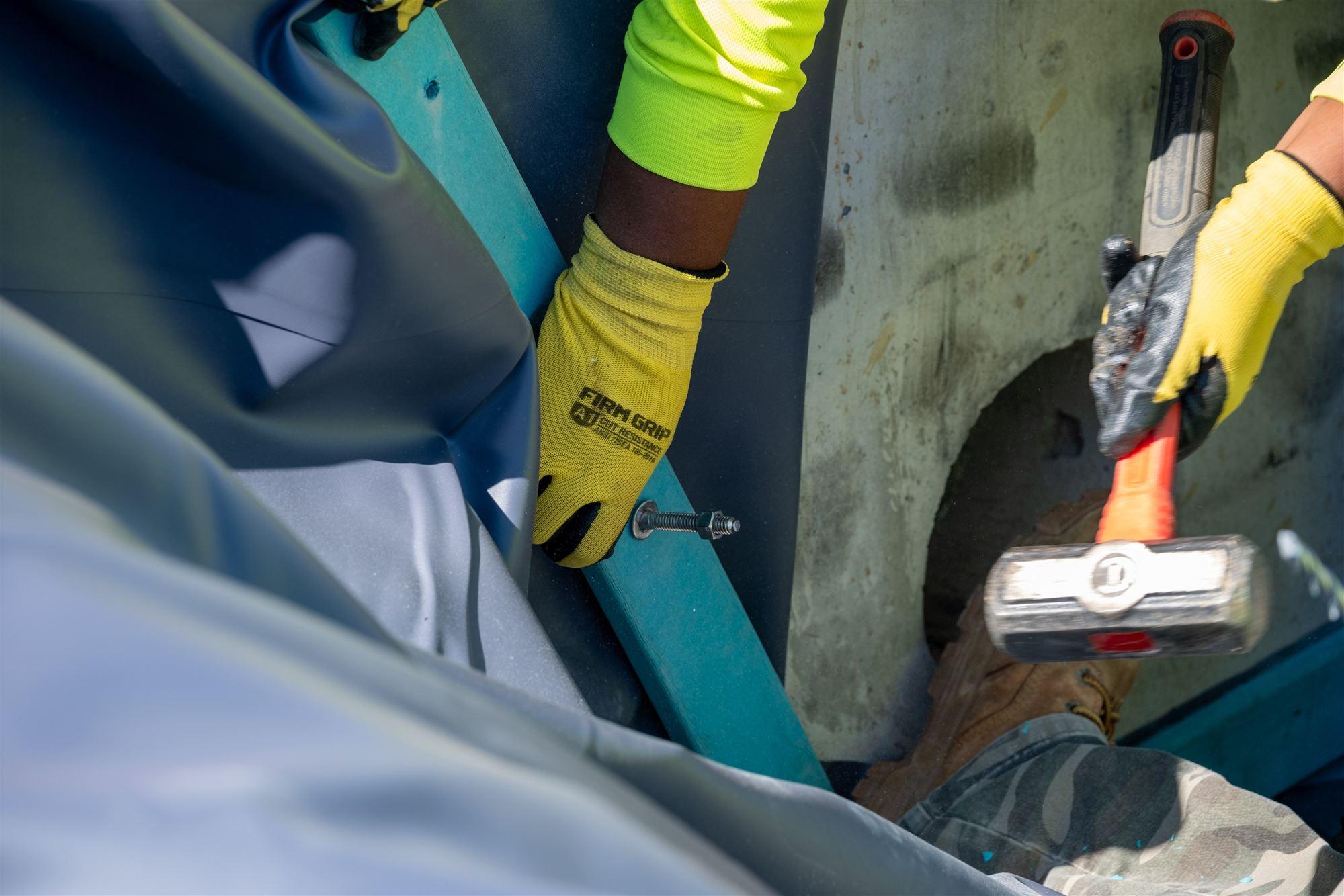
Accessories
The small parts that hold the job together.
- Sod staples and pins
- For blankets, mats and fabric.
- Wood stakes and metal T-posts
- For silt fence, wattles and barrier fence.
- Welded wire mesh
- Backing for silt fence.
- Hog ring pliers, C-rings, aluminum ties and zip ties
- Fastening fabric to mesh and posts.
- Landscape ground cover
- Woven and needle-punched fabric for weed control, landscaping and nursery beds.